Saturday, June 2, 2018

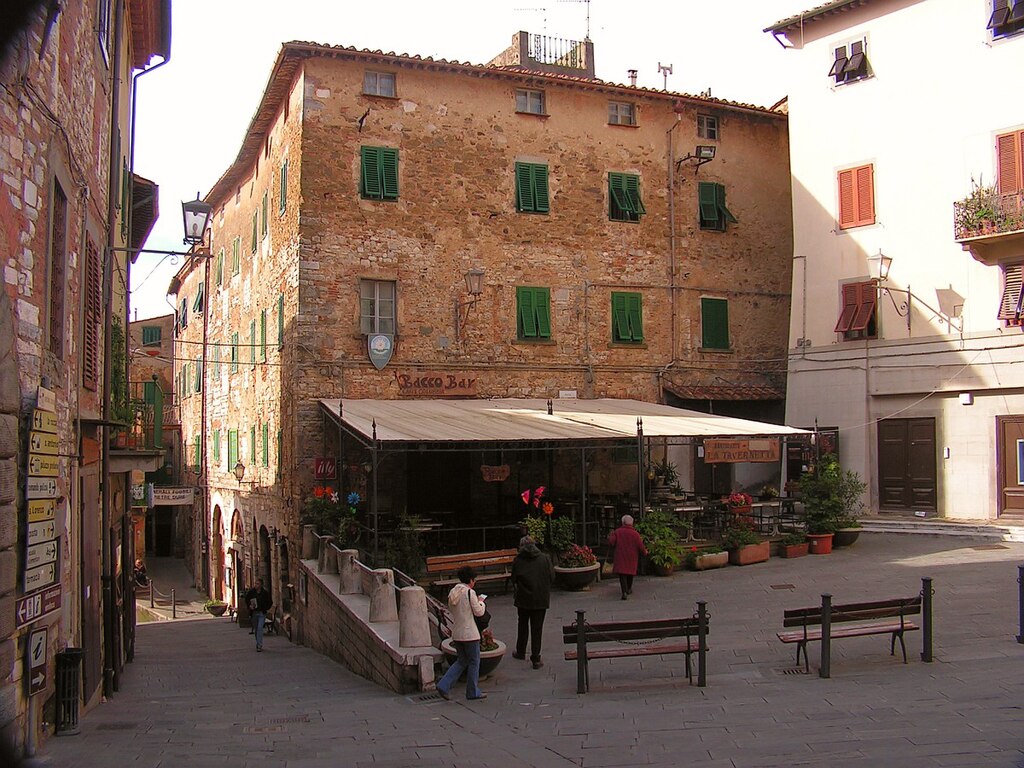
Campiglia Marittim (near Livorno)

If you are fortunate enough to return to Livorno, Italy on a cruise port call, and have already visited Florence, the surrounding countryside, and Livorno itself, you may find a daytrip to a nearby historical town is a relaxing alternative. Here is a little town I discovered when a client asked me this exact question.

Piazza della Repubblica
Campiglia Marittima is a comune (municipality) in the Province of Livorno in the Italian region Tuscany, located about 90 kilometres (56 mi) southwest of Florence and about 60 kilometres (37 mi) southeast of Livorno.

Situated in a hill overlooking the sea and the surrounding countryside, the town has medieval origins but traces of Etruscan and Roman civilizations can be found as well.

Apritiborgo Festival scene
Creative Commons image, tanran2 on Flickr
If you visit in August, you may be in for a treat. This is when the town hosts Apritiborgo Festival, a street art festival that has been held annually since 2005. It usually takes place in mid-August, from around the 11th to 15th (be sure to check the actual dates for the year you visit).

Campiglia Marittima's past is linked to metal-working activities, This is evidenced by the Val Fucinaia furnaces and the remains of mining and metallurgical works in the Archaeological-Mineral Park of San Silvestro.
Rocca de San Silvestro
Archaeological-Mineral Park of San Silvestro

All other images: Wiki Commons

Berlin: Meet the "real" Checkpoint Charlie

If you've been to Berlin and think you have visited Checkpoint Charlie, but have not ventured out of the city core, you probably saw the replica at the site where Checkpoint Charlie once stood. The "real" Checkpoint Charlie lives at the Allied Museum. In fact, there are two Charlies in residence here.

All that remains of the original hut erected at Checkpoint Charlie in 1961 is this facade, but it is preserved inside at the museum:
Outside the museum is the actual Checkpoint Charlie building that was removed, intact, from where it stood on the border between East and West Berlin in 1989 when the wall fell. Note: In the background of this picture, you can also see a train car; the Allies ran regular military trains during the occupation period and this is a car that has been preserved.
Silly Canadian girl getting her picture taken with Charlie....
The museum also has a real watchtower, complete with a working spotlight, and a slice of the Berlin Wall:
This watchtower once stood at Potsdamer Platz and Bernauer Strasse and inside there is a red phone from the day when the tower was in use. To quote from the adjacent plaque, "The Red Telephone connected the last supreme commander of the former Soviet Forces in Germany, Colonel General M. P. Burkakov with his superiors in Moscow." Spooky....
The pride of the museum is, without doubt, The Royal Air Force Hastings TG 503 aircraft that was flown as part of the Berlin Airlift during the Berlin Blockade of 1948-1949.
I actually got to tour the plane! While the museum is open daily, the aircraft tours only take place on specific days, so it took some organizing for me to get there on a Sunday! Here is my ticket which cost me a whole 1E (the museum was free)... cool the way they've done the tour tickets up, probably for appreciation by the kids, but I liked it too.

Up the stairs and just inside, looking out....
Sitting IN the plane, watching a movie about the Berlin Airlift. The film was only in German (you can learn all the history in English in the exhibitions) but a picture truly is worth a thousand words, and I still enjoyed it. Interesting to see it with a few children, important that they understand this history...
Waaaaay coool picture taken looking out the window, with the museum signage in the background....
Seeing this sign, and the spot where they hung their parachutes, made the visit very real. The airlift was not without its tragedies, including fatalities (39 on the British side, 31 on the American side, and at least 8 deaths on the German side).
The cockpit was quite something....
There were lots of other interesting exhibits, not the least of which was this jeep. There are 2 jeeps at the museum, both well preserved/restored.
Smile!!!!
This was a neat display, showing telephones, bus stop signs and postal boxes from the British, French and American occupying forces. They also had displays of uniforms from all three, if you are into that kind of thing...
Another remarkable exhibit is the authentic spy tunnel. During an 11-month period in 1954-1955 - in order to avoid being surprised again by actions such as the Berlin Blockade - the American and British intelligence services made clever use of a 450-metre long tunnel used for underground telephone cables used by the Soviet armed forces in the GDR (East Germany) by tapping the lines. There was quite the broohaha when the tunnel came to light, thanks to a British double agent named George Blake who spilled the beans to the Soviets. This last remaining section of the tunnel was salvaged in 2005.
Lot and lots of other good exhibits. Couldn't resist taking a pic of this kid checking out a model of an airport with a bunch of the planes.
Just a nice pic of one of the two buildings on site; the "Outpost" used to be a theatre, and they have done a clever job of repurposing the space without gutting it. Love the art deco feel.
Here's the Outpost at dusk with its neon lights on...
Finally, but actual first, was this statue I came upon on my way to the museum from the U-Bahn; it is actually part of the museum's collection. It is called "The Day The Wall Came Down". It's a very moving piece. The horses are life sized and seemed so real, and the torn and toppled wall pieces captured the moment. I wonder whether the horses symbolized the ones at Brandenburg Gate (which were imprisioned in the "no man's land" for 28 years); even if they don't, that's what it brought to mind for me.
Overall, a very good museum. It was maybe 20 minutes, 30 max, to get to the museum. Its doubtful you'll find crowds but you'll definitely find real "stuff". I spent 2-3 hours there. Depending on your level of interest in the history, you could spend less time (most do), or spend more time (I'm sure there are some, I still only absorbed about 1/2 of it). The website also has some good information, if you are patient, as the organization isn't the best, but the content is good.

This story was originally published on my personal blog while travelling.

Sunday, May 20, 2018

Rome 1960

The Opening Ceremonies of the 1960 Summer Olympics in Rome...
who knew what controversy had been stirring, and what was still to come?

I first bought Rome 1960: The Summer Olympics That Stirred the World, by David Maraniss, when it first came out. I was so interested in the topic that I paid full price for the hardcover (rare for me). It did not disappoint. If you are interested in Rome, or the Olympic movement, or both, I can highly recommend this book.

Here are a few reviews of Rome 1960: The Summer Olympics That Stirred the World

You can read a Q & A with David Maraniss, the book's author, on his website.

For a sampler, you can look inside the book or listed
Wrestling at the 1960 Summer Olympics in Rome

Sunday, May 13, 2018

Atlantic City's Streets of Monopoly

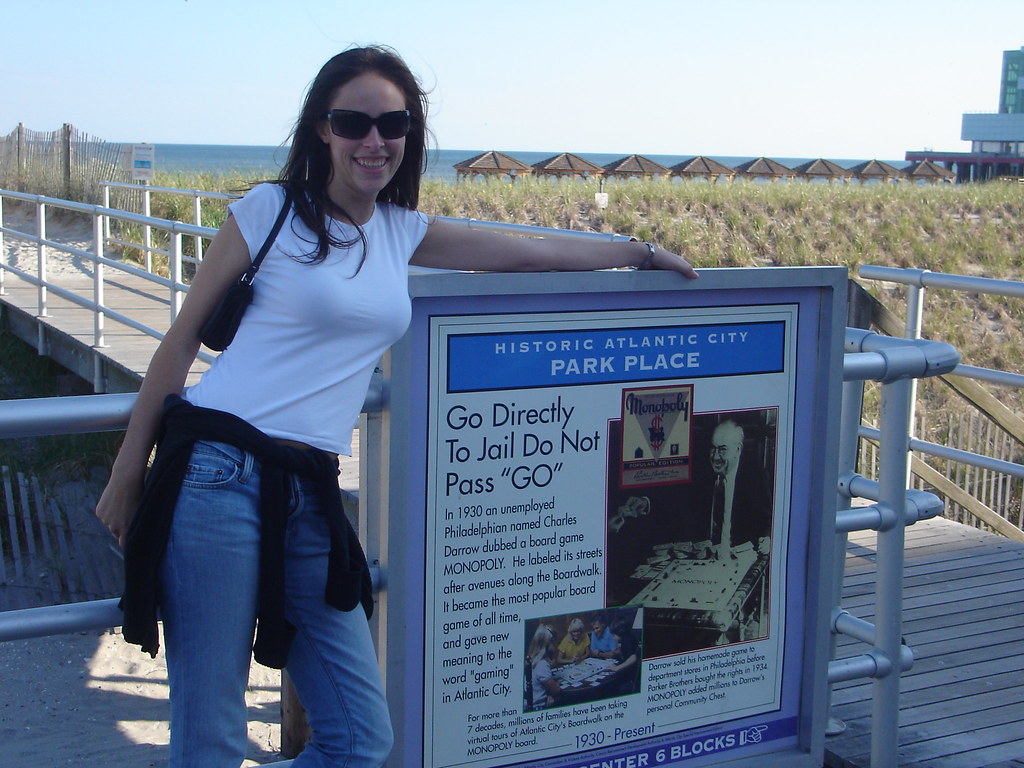
Goofing with Monopoly signs in Atlantic City
Creative Commons image shoshanah on Flickr 
I stumbled across this 2014 story - "The Avenues of Monopoly, Captured in Pictures" - and found the premise compelling: a photographer's photo essay on the Atlantic City streets made famous by the original Monopoly board game. It's worth looking to see the photos:

"Headlines from Atlantic City today read like they might be pulled from Monopoly, the most famous board game ever made about Atlantic City, or any other city. "Atlantic City Allowed to Collect Up to $30 Million Unpaid Revel Property Taxes," reads one from The Wall Street Journal. It's a bank judgment in the city's favor, practically a card drawn at random from the Chance deck. "Economist: Atlantic County Job Losses Among Worst in Nation," reads another story, about how the city is suffering the worst single-year contractions in employment in recent national history. Do not pass Go, do not collect $200..." [The Avenues of Monopoly, Captured in Pictures].
Here are a few other interesting Monopoly stories I found along the way:

A Monopoly "spinner" used in
WWII when dice were unavailable
"During World War II, Allied soldiers in German prison camps used Monopoly games for more than just amusement. Thanks to an ingenious scheme by a branch of the British Ministry of Defense known as MI9, these soldiers were actually able to use Monopoly games to escape to freedom. Allied prisoners received these games as part of aid packages that usually came from charities like the Red Cross.

The Germans believed that the games kept their POWs from planning to escape by providing them with amusement. Ironically, many of the packages’ Monopoly games were designed by their U.K. manufacturer to have the opposite effect entirely, and, in fact, secretly doubled as escape kits. The plan involved having fake charities deliver aid packages containing these games, which, in truth, contained various escape tools, including “playing pieces” that were actually compasses or metal files that could be used to cut through barbed wire.

Even the games’ “play money” was actually real French, German, and Italian money that could be used for food, bribes, or train tickets. Hidden within their boards, the games also had silk maps that prisoners could use to travel to safety after leaving their prison camps. The manufacturer made the maps with silk so that they would neither deteriorate in water nor rustle when POWs unfolded them, thus not alerting German guards..." [read more].

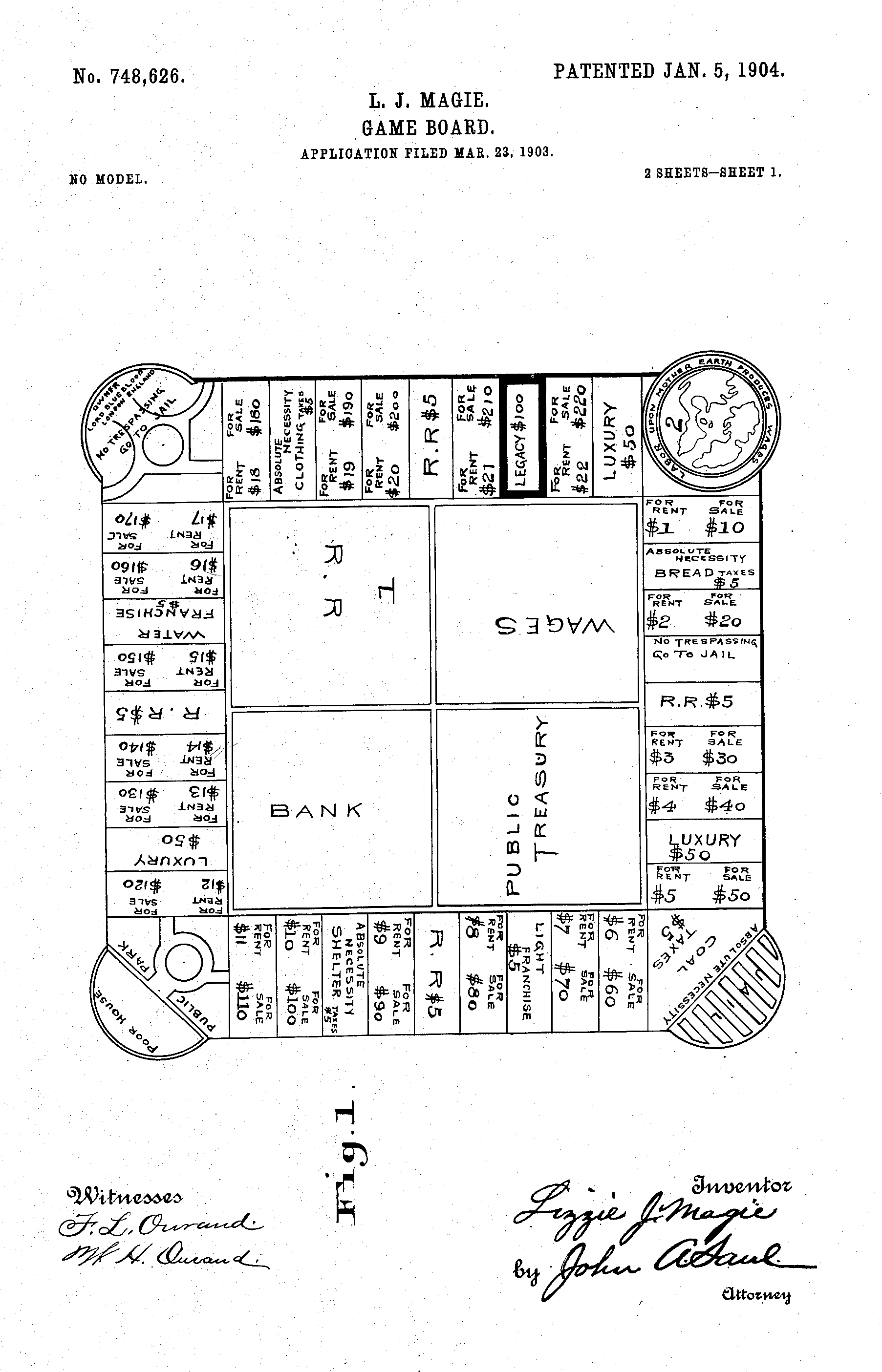
Elizabeth Magie's 1904 Patent US1509312A
"Monopoly is arguably one of the most popular board games in modern history. But, the original version, released in 1906, doesn’t look like the version sitting on your shelf at home right now. In fact, it didn’t even have the same name.

A young woman by the name of Elizabeth Magie created the game to show a “practical demonstration of the present system of land-grabbing with all its usual outcomes and consequences.” She was inspired after reading Henry George’s book, Progress and Poverty. The first version of the game was called The Landlord’s Game..." [read more].

If that's news to you, it's probably because Charles Brace Darrow was best known as the claimed inventor of the Monopoly board game (he went on to become the first millionaire game-designer in history.

In fact, however, Elizabeth Magie was the original Monopoly inventor, and Darrow's version was derivative.


About the photographer
The Avenues of Monopoly, Captured in Pictures - CityLab
Mike Osborne: Monopoly - Holly Johnson Gallery, Dallas
The Monopoly Project - on the photographer's website
Mike Osborne Photography - the photographer's website
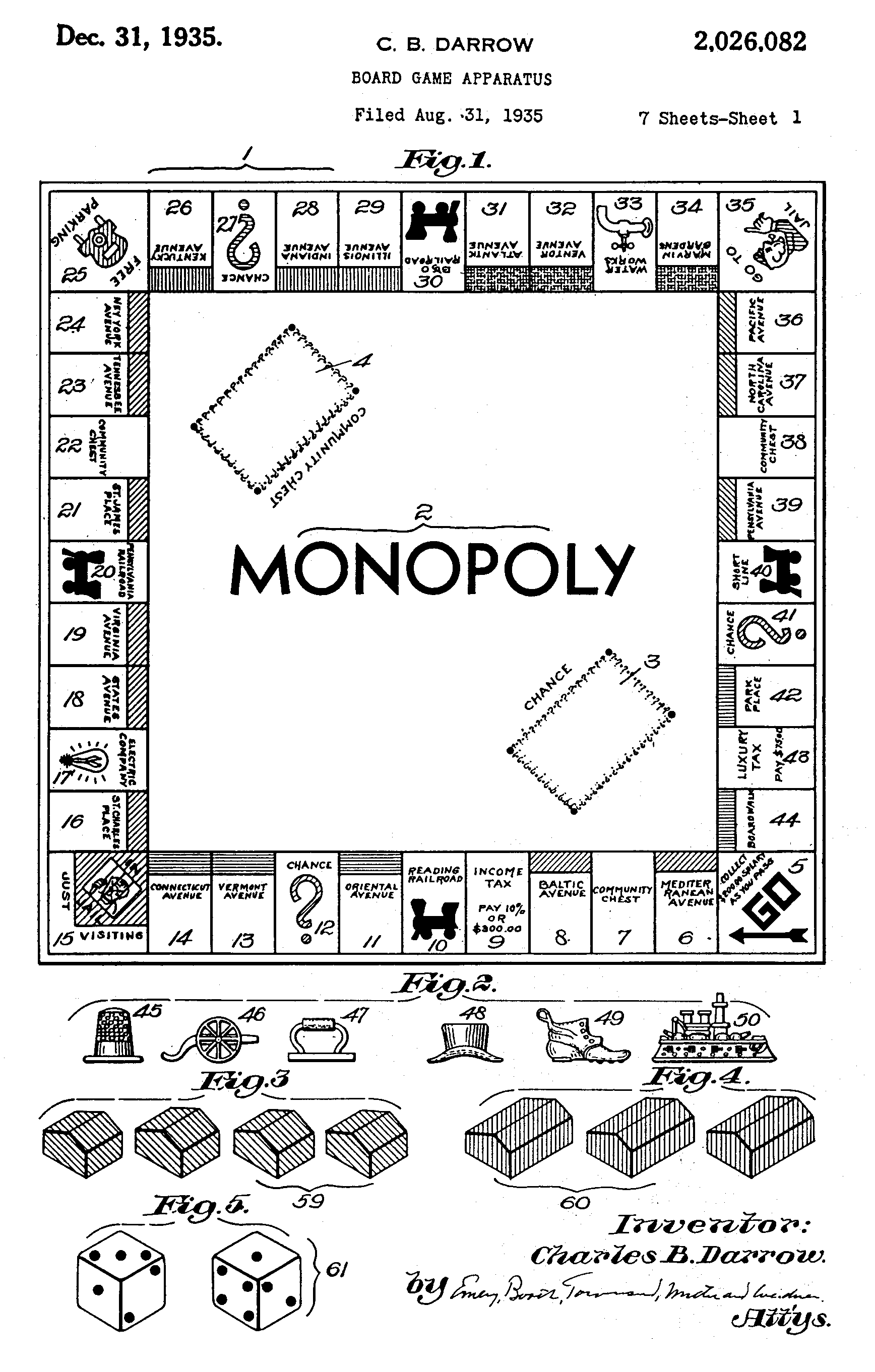

Charles Darrow's 1935 Patent US2026082A
(read more)
To learn more
76-Second Travel Show: Monopoly Travel - Lonely Planet
The Search for Marvin Gardens (1972) - The New Yorker
How Allied Prisoners Used ‘Monopoly’ To Escape Nazi POW Camps - All That's Interesting
This Is What the First-Ever Monopoly Game Looked Like - Reader's Digest
Monopoly’s Inventor: The Progressive Who Didn’t Pass ‘Go’
Monopoly House Rules - WikiBooks
Hasbro Monopoly Game - official website
List of Monopoly Games - Wikia
20 Monopoly Games You Never Knew Existed - All That's Interesting

Thinking of visiting Atlantic City?
76-Second Travel Show: Monopoly Travel - Lonely Planet
What's New in Atlantic City for 2018 - Martz Railways
24 Hours in Atlantic City - Traveling Greenes
Atlantic City Stemming is Losses - Globe and Mail
Atlantic City was once a bustling tourist hub — here's how it has changed

Sponsored content (mine!)
Cruises - my cruise website
Feel free to contact me if I can help you with your travel plans
Thursday, May 10, 2018

Barcelona Precincts, by Ben Holbrook

Barcelona Precincts: A curated guide to Barcelona’s best shops, eateries, bars and other hangouts


By Ben Holbrook


Travel blogger and author Ben Holbrook has a new book. It's called Barcelona Precincts, and it's stunningly beautiful!


Barcelona Precincts is Holbrook's personal guide to the city’s 12 hottest barrios (neighbourhoods). Anchored with a map, Ben shares his favourite places to eat and drink and shop, topping off each area with an interview with a local.


"Each chapter features beautiful imagery (it nearly killed me photographing the city throughout the blistering summer heat), maps, an interview with a local. This book was a true labour of love and consumed me entirely for much of the year."


"The finished product is something I am immensely proud of. Not only is it a gorgeous object of desire, something that will make a beautiful gift or look seriously sexy on your bookshelf or coffee table, but it’s something I poured my heart and soul into (and plenty of blood, sweat and tears along the way). This is not just a book, but a little slice of my very being...[read more].

Buy the book

amazon.ca
amazon.com
amazon.uk
Hardie Grant - Publisher

Tip: If you buy the print version of the book you can also download a FREE digital version to browse on your smart device ("though I should add that it’s simplified and doesn’t quite have the same magic as the print version," advises Ben).

Follow the author
Barcelona Precincts - book's page on author's website
More Barcelona - on author's website
Biography
@ben_holbrook on Twitter

Related resources
Ben Holbrook's Perfect Day in Barcelona - Homage to BCN
Meet Driftwood Journals Blogger Ben Holbrook - The Culture Trip
Ben Holbrook's articles - The Telegraph


Sponsored content (mine!)
Cruises from Barcelona - my cruise website
Feel free to contact me if I can help you with your travel plans

Monday, May 7, 2018

Athens reads

The city of Athens is often overlooked as a destination, but has a lot to offer. I really came to appreciate the city when I rented a flat here for a month.

If your travel takes you through Athens, plan to stay a few days to explore.

Here are a few books worth reading, to get you in the mood:

Dinner with Persephone: Travels in Greece
- by Patricia Storace
"I lived in Athens, at the intersection of a prostitute and a saint."  This is how this book begins, a memoir of the author's year in Greece. I truly adored this book. I read it while I was in Greece, and it really gave me great insight into the Greek people, particularly in Athens.
The Acropolis: The Acropolis Museum
- by Katerina Servi
The new Acropolis Museum is housed in an amazing building at the foot of the Acropolis, with a stunning view of the Parthenon. This book guides you through the museum, giving interesting information and highlights the most important exhibits. The museum is spectacular to visit - don't miss it!
Athens: The City Beneath the City: Antiquities from the Metropolitan Railway Excavations
- by Liana Parlama, Nicholas Stampolidis
During excavations for the Athens metro (built for the 2004 Summer Olympics), many archaeological artifacts were discovered, as highlighted in this book. The contrasts of old/new are quite striking if you view the artifacts (or replicas), at several metro stations.
Time Out Athens
I read this Athens guide cover to cover... not sequentially, but like an explorer... long before I made plans to visit the city. It helped me know I wanted to stay a month, which I did. A bit out of date, but I don't imagine that what made this book special has changed much - just be sure to refer to a current guidebook as well.


Ancient Athens on 5 Drachmas a Day
- by Philip Matyszak
Set in Athens in 431 BC (you'll meet Socrates), this book is designed to educate and amuse. This "well-researched yet irreverently unacademic guide" gives context for Athens today. If you like this book, you may be interested to know that the author has written other similar works, including Rome.
Created with the HTML Table Generator

Sponsored content (mine!)
Cruises from Athens - my cruise website
Feel free to contact me if I can help you with your travel plans

Saturday, April 28, 2018

Paris: Wandering the city's charming Passages

The Passages of Paris are one of the city's treasures. Several of them, in fact, as they are scattered throughout the city.

These passageways between buildings were covered shopping districts of their day, long before paved streets. Even if the weather was poor, the well-to-do could dress up and do a little shopping free from the rain and mud.

I explored several passages when I spent a month in Paris in 2009
Many of the passages still exist. Some are restored, while others are sorry shadows of their former selves, but they are all fascinating.

Here is a post I wrote about my initial passage experience.

Today I began to explore the covered passages of Paris. I travelled to the Bourse Metro stop and walked a couple of blogs to the entrance of Passage Panoramas... [read more].

Blog retirement

I've decided to retire this blog. I don't really have the time or interest to keep it up... Any content of value has been transferr...