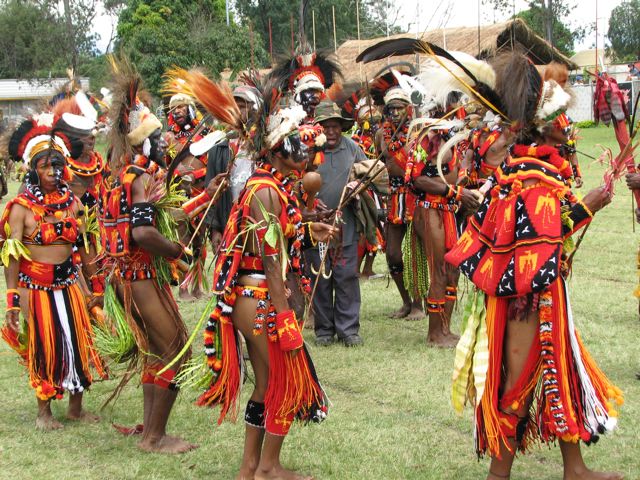
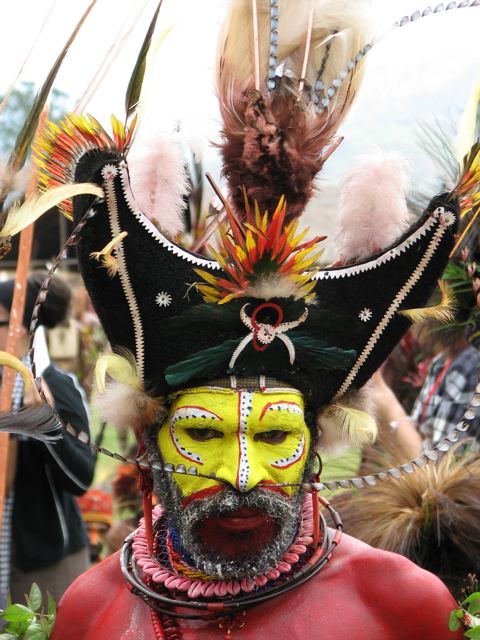
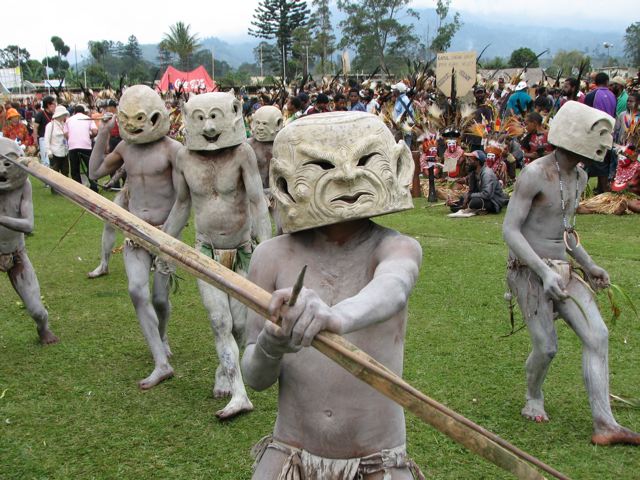
This week I helped a couple book flights to Goroka to visit their daughter. They had timed their visit to take in the annual Goroka festival. The destination is so far off our radar that I had to get IT to add the Goroka Airport code (GKA) to our CRM in order to do my invoice! Needless to say, I was intrigued. Here's what I learned...
The Goroka Show is a well-known tribal gathering and cultural event in Papua New Guinea. It is a Sing-sing held every year close to the country's Independence Day (16 September) in the town of Goroka, the capital of the Eastern Highlands Province.
About 100 tribes arrive to show their music, dance and culture. The festival started in the mid-1950s as an initiative of Australian Kiaps. In recent years it has become a major attraction for both national and international tourists and remains the largest cultural event in Papua New Guinea despite similar shows now being organised in Mount Hagen and other cities around the country.
Creative Commons images Drew Douglas, kabl1992 on Flickr
Resources
Goroka Show website
Goroka Show - 1957 and 1958 (photos)
Saturday, March 3, 2018
Thursday, February 8, 2018
Peschiera del Garda (near Milan)
| Peschiera del Garda, Italy |
In this case, my clients are a couple who will be disembarking their cruise in Rome (which they have visited before), and then taking the train to St. Moritz in Switzerland, to take the famous Glacier Express train to Zermatt, home of the Matterhorn (from there they will fly to Zurich, then home). Bucketlist stuff.
They want to break up the journey between Rome and St. Moritz with a night or 2 or 3 in an Italian town. They have already visited Florence and Venice, and were not interested in Milan, so asked for a smallish Italian town. I happened to also know that something that had been on their bucketlist, but they had let go of, was to spend a few days in a lakeside setting in Switzerland.
With this in mind, I decided to pick the brain of one of my colleagues, who just happens to be Italan. As travel agents cannot visit everywhere, we collaborate a lot, leaning on each others knowledge and travel experiences. In this case, Marina was my ace in the hole, having lived in Italy, and travelled the country extensively.
The little gem of a town she identified for me is named Peschiera del Garda, located on Lake Garda, near Verona. Population < 10,000. I'm so charmed that. Want to visit there myself.
The following is an excerpt from the blurb I wrote for my clients, to introduce them to Peschiera del Garda.
Lake Garda, Italy
There are small resort towns located all around Lake Garda. The largest lake in Italy the north of the lake is narrow and surrounded by mountains and is well known for its water sports and outdoor activities. The choice is endless, sailing, kite surfing, windsurfing, mountain biking, hiking, climbing etc. The south of the lake is wider and with gentle rolling hills. The south of the lake also has a warmer climate than extreme north end of the lake which is cooled by a strong breeze which rolls off the Dolomite mountain valley above Riva in the early afternoon.
All the resorts around the lake have different flavour and one of the great joys of a Lake Garda holiday is travelling around the by ferry or road to soak in the local ambiance. One thing all the towns share is immense civic pride which is reflected in high standards cleanliness, lack of graffiti and the politeness of the people.
Peschiera del Garda (pop. 9,995)
Peschiera is a small charming town at the south-eastern tip of the lake Garda. Its core is located at the inside of an old Austrian fortress, where the river Mincio – the main outlet of the lake – starts to flow by four branches which form beautiful canals crossing the old town.
Officially, Peschiera del Garda is a town and comune in the province of Verona, in Veneto, Italy. The comune is part of the Associazione Città del vino ("Association of Wine Cities").
Historically, when Lombardy-Venetia was under Austrian rule, Peschiera was the northwest anchor of the four fortified towns constituting the Quadrilatero. The fortress is on an island in the river Mincio at its outlet from Lake Garda. Roman Ardelica was a town of Gallia Transpadana that occupied the site of the modern Peschiera del Garda, at the southeast angle of the Lacus Benacus (Lago di Garda), just where the Mincius (modern Mincio) issued from the lake. The town is mentioned as Arilica in Pliny the Elder's Naturalis Historia.
The fortress at Peschiera played a prominent part in most military campaigns conducted in northern Italy after 1400, especially during the Italian campaigns of the French Revolutionary Wars and the Napoleonic Wars.
Piazza Maestro Giulio Battistoni (at the town's centre). Peschiera is the major ferry harbour on the lake. There are connections from there to virtually all the destinations at the shores of the lake.
Peschiera del Garda railway station, opened in 1854, forms part of the Milan–Venice railway.
Main Sights
Castello Scaligero di Peschiera: the fortress and the external fortifications. Originally it was a 16th century fortress which is now a walled historical centre of the town. It's listed on the UNESCO World Heritage List.
Santuario della Madonna del Frassino (Sanctuary of Madonna del Frassino) (1511). It houses works by Paolo Farinati and Zeno da Verona.
Palazzina del Comando del Presidio (Garrison Headquarters). Palazzina with other buildings of this small island form a military core of the Austrian fortress. There is a relatively quiet atmosphere around there compared to the touristy civic centre of the town.
Scavi Romani (Roman Excavations), Piazza Ferdinando di Savoia, 11-13 (near the Chiesa di San Martino). Remains of Roman buildings (foundations) excavated in 1981. There are not much to see there, but it's free.
Top 5 Hotels in Peschiera del Garda (TripAdvisor)
1. Enjoy Garda Hotel
2. Hotel Dori
3. Hotel Garden
4. Hotel Acquadolce
5. Le Ali del Frassino
Suggested resources
Peschiera del Garda Tourist Informatio
Sunday, December 3, 2017
Underground Montreal
Friends Luc Le Blanc and Daniel Caron spend much of their free time in Montreal exploring below ground in the city's Saint-Léonard Cavern. The cave is a registered historic site, with restricted access and guided tours.
The cavers had the surprise of their lives in October when they knocked through a limestone wall and uncovered the entrance to an immense second cave. Well, it wasn't a total surprise ~ they had been 'dowsing' , looking for water and a larger cave ~ but it was definitely an exciting discovery.
The Cavernicole Cave (or la caverne de Saint-Léonard) is a cave located underneath Pius XII Park (Parc Pie-XII) in the borough of Saint-Leonard in Montreal. It is a registered historic site with restricted access and guided tours.
A little history:
- The cave was first discovered in 1812.
- During the Patriote Rebellion of 1837, it served as an armoury, weapons cache, and hidey-hole for Les Patriotes.
- In 1968, the government deemed it a safety risk and closed off the cave.
- In 1978, the Quebec Speleology Society reopened the cave for study.
- It was subsequently declared a historic landmark, and guided tours were set up.
Until the recent discovery, the cave was thought to be relatively small, at 35 metres long and 8 metres deep. The second cave, hidden behind a limestone wall, is a massive 250 metres long.
This week, Luc and Daniel are getting their 15 minutes, as their discovery was disclosed to the general public.
| Entrance to the public cave |
Recent news highlights:
Spelunkers discover 15,000-year-old cavern in St-Léonard park
'This is a major discovery': Explorers find massive ice-age cavern beneath Montreal
Ice Age-Era Caves Discovered Under Montreal
Information on exploring the public cave:
Show Caves of Canada, Cavernicole de Saint-Léonard
The Secret Montreal Cave You Can Visit And Explore, Mtl Blog
Did you know you can visit Montreal on a cruise? Check out these Canada New England cruises from Montreal, or contact me for sailings to Montreal.
Monday, October 2, 2017
The Orkney Islands' Ring of Brodgar
| The Ring of Brodgar in the Orkney Islands |
Most henges don't actually not contain stone circles; but Brodgar is a striking exception. It ranks with Avebury and, to a lesser extent, Stonehenge, among the greatest of such sites. It is part of the UNESCO World Heritage Site known as the Heart of Neolithic Orkney.
Also known as Brogar, or Ring o' Brodgar, the henge is situated about 10 kilometres (6 miles) north-east of the village of Stromness, on Mainland Island, in Orkney, Scotland. Mainland is the largest of the Orkney Islands, and the ring of stones stands on a small isthmus between Loch Harray and LochStenness and Harray.
It is thought that the monument was erected between 2500 BC and 2000 BC, which would make it the last of the great Neolithic monuments built on the Ness. Flint arrowheads found nearby seem to date from the Bronze Age. An excavation was undertaken in 2008 to settle the age issue, but they are still digging through the results, so to speak.
The Ring of Brodgar stone circle is 104 metres (341 feet) in diameter, the third largest in the British Isles.
While today only 27 stones remain standing, the ring originally comprised up to 60 stones. The tallest stones stand at the south and west sides of the ring. The famed "Comet Stone" stands on the southeast side. Unlike similar structures such as Avebury, there are no obvious stones inside the circle.
Part of a concentration of ancient sites, and the northernmost circle henge in Britain, the Ring of Brodgar is part of a significant ritual landscape.
Within 5.2 square kilometres (2 square miles) there are the two circle-henges, four chambered tombs, groups of standing stones, single stones, barrows, cairns, and mounds.
The Ring of Brodgar has been recognized as part of the "Heart of Neolithic Orkney" World Heritage Site in 1999. Others sites include in the designation includes Maeshowe, Skara Brae and the Standing Stones of Stenness.
Related resources
Stinge Henge: eight alternative ancient stone monuments - LonelyPlanet
The Boy with the Bronze Axe - Kathleen Fidler*
* the 1968 novel depicts the Ring of Brodgar as a male-only space in which a lamb is sacrificed in a midsummer ceremony
Tuesday, September 5, 2017
For the love of cities
![]() |
| Paris will steal your heart... Photo: Paul Marshman |
Long before I coined "cruisetravelbug", I was, and still am, "citytravelbug"... I love city travel, living like a local, exploring local haunts, hanging out in sidewalk cafes and coffee shops (a few bars too). What cities inspire you? I hope you enjoy Paul's piece, and if you're left craving a city break, I can help you plan your trip.
The world is full of cities. Big cities, small cities, pretty cities, rough cities – they come in every shape and size. But now and then, you travel to a city that really captures your imagination, a place where every street corner seems to hold something magical. I’ve had that experience, and I imagine you have too.
So I thought it would be fun to look at some of those special cities around the world — cities that will steal your heart and leave you with warm memories that last for year. The list isn’t long; not that many cities pass the test, at least in my judgement. In fact, a few cities that others rhapsodize about have left me a bit cold... [read more].
Want to plan a city break? Please contact me.
Saturday, June 4, 2016
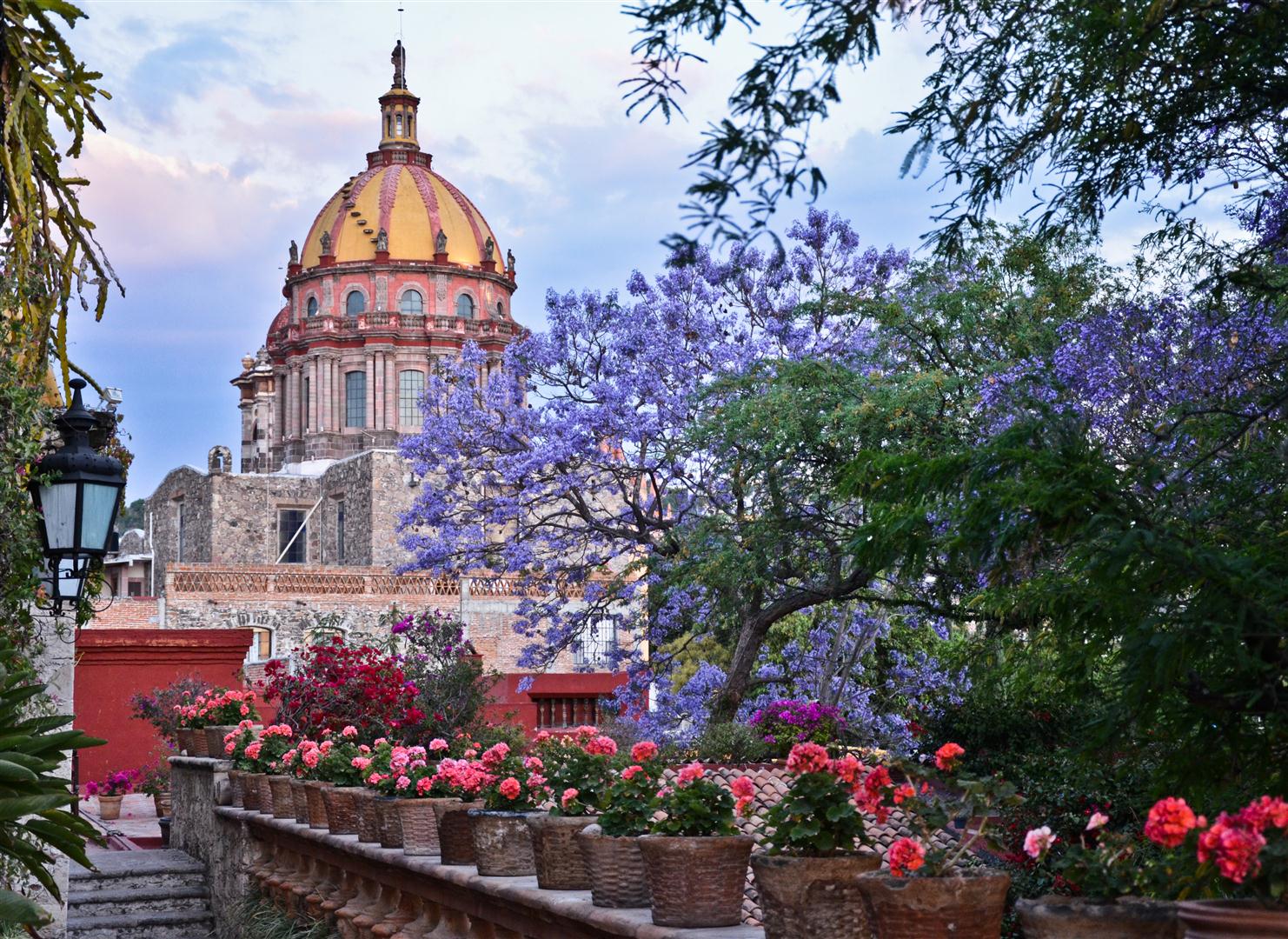
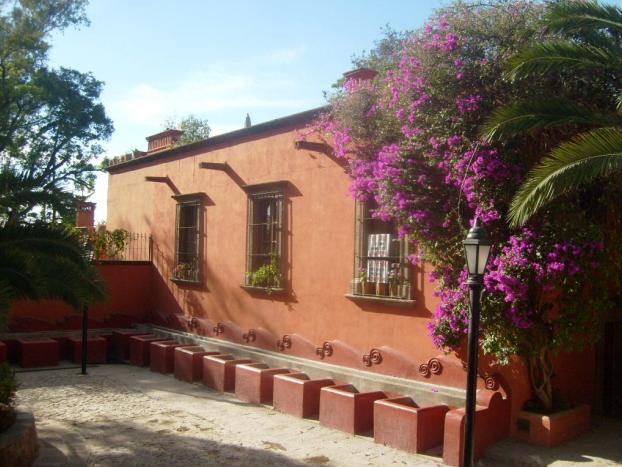
San Miguel de Allende
Inspired by the charm in a book I am reading - On Mexican Time, by Tony Cohan - I am learning about San Miguel de Allende, a small village in Mexico.
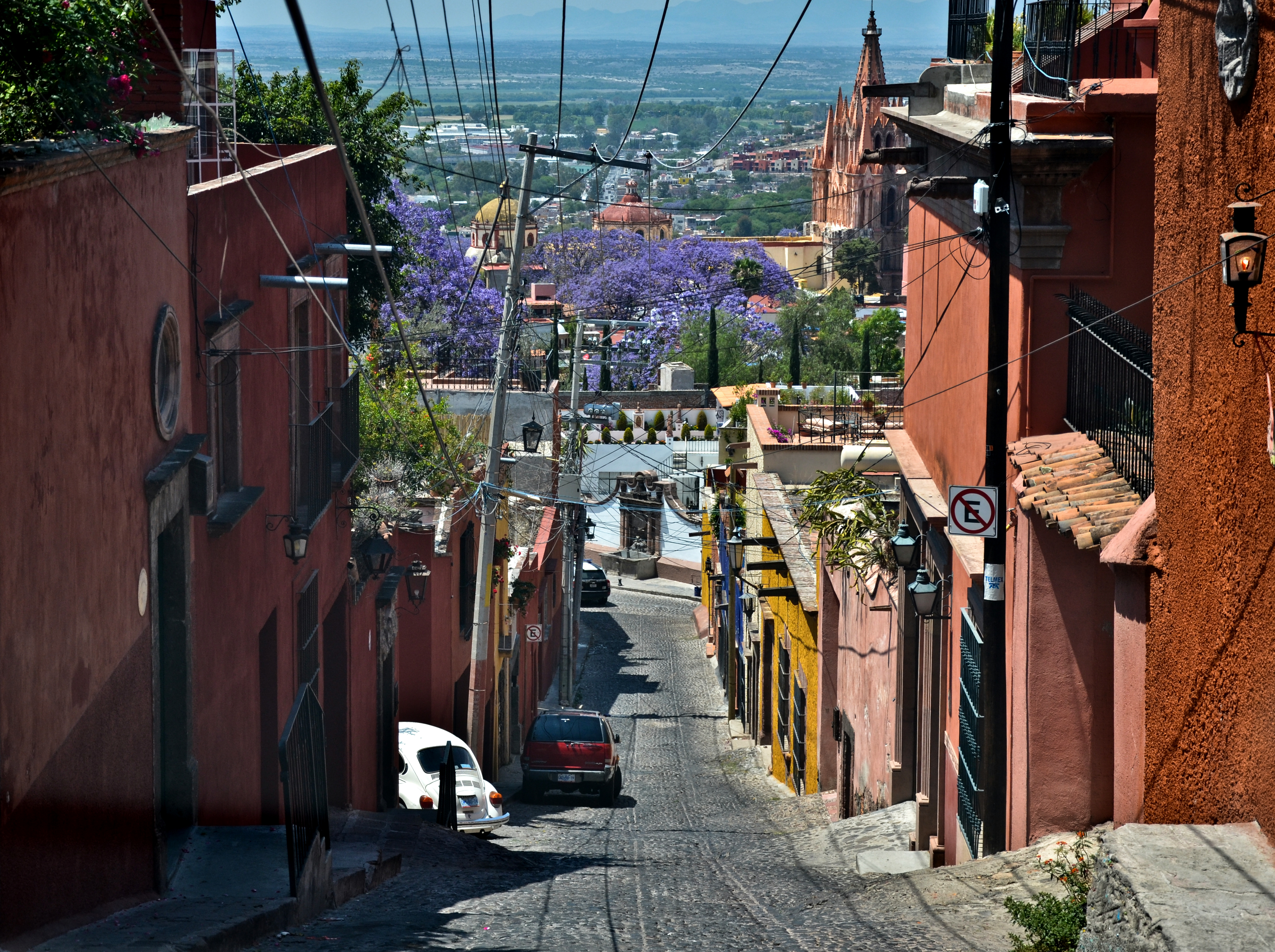
San Miguel de Allende is in central Mexico (no seaside here), in the far eastern part of Guanajuato state. They call the macroregion Bajío. Due to its remote location, San Miguel de Allende is difficult to get to, but its remoteness is part of its charm.
The well-preserved historic town centre, a UNESCO World Heritage Site, is filled with buildings from the 17th and 18th centuries. The nearby Sanctuary of Atotonilco is also a World Heritage Site.
That is, until its Baroque/Neoclassical colonial structures were "discovered" by foreign artists.
| The public laundry (lavaderos publicos) |
Ultimately, the expat-friendly town has attracted a foreign retirees, more artist types, and tourists. When combined with the wealthy Mexicans who have rediscovered San Miguel as a Malibu-like retreat from Mexico City, San Miguel today has an eclectic mix of Old World Mexican charm, American hospitality, and a relaxed party atmosphere.
Just watch your step, bring comfortable shoes, and expect a bit of workout. San Miguel was built into the side of a mountain, so it can be difficult to traverse (some inclines are 15 or 20 degrees). Many of the narrow, cobbled streets have fallen into disrepair, and curbs are often a high step away from the road.
I am intrigued by...
Another Face of Mexico Mask Museum - a private collection of 500+ Mexican ceremonial masks (by appointment only)
Public Library (Biblioteca Pública) - features 30,000 titles in English, a small gift shop, a café and free wifi (temporary memberships available)
El Charco del Ingenio Jardín Botánico (Jardín Botánico) - a unique park above the town with an enormous collection of cacti (apparently one should use beer to coax a local to use their key to let you in the back gate)
Thermal pools - just outside of town, for an afternoon of relaxation (pre-arrange return transportation or know when the last bus arrives)
Suggested resources
10 Reasons Why People Fall in Love With San Miguel de Allende - Huffington Post
San Miguel de Allende Today - Travel+Leisure
San Miguel de Allende tourist information - Visit Mexico
Country Mouse - blog post about Tony Cohan, author of On Mexican Time - David Lida
Getting there: see San Miguel de Allende on Wiki Voyage for options.
Friday, May 6, 2016
Pietrasanta, the city of sculpture
Today I learned about the Italian town of Pietrasanta, and thought I would share what I learned.
I first heard of Pietrasanta when I was reading about tours to Carrara, where there are marble quarries. I never really thought about visiting a quarry before, but when I think of all the amazing marble sculptures and architecture in Italy, I became intrigued. More about that later, but when I stumbled across references to Pietrasanta as "the city of sculpture" I was hooked. I wanted to learn more.
Pietrasanta is in the Versilia area, on the coast of northern Tuscany in Italy, in the province of Lucca, about 32 kilometres (20 miles) north of Pisa. The town is situated 3 kilometres (1.9 miles) inland from the coast (where the frazione of Marina di Pietrasanta is located).
With Roman origins (part of the old Roman wall still exists), the medieval town was founded in 1255. Like most of Tuscany in general, the area has long enjoyed the patronage of artists.
The aspects of the town's history that are most compelling to me relate to the marble and the sculptors who worked here. Pietrasanta grew to importance during the 15th century, mainly due to its connection with marble. In fact, Michelangelo was the first sculptor to recognize the beauty of the local stone.
Things that interest me about Pietrasanta:
- Both Michelangelo and Henry Moore lived and worked here
- It is referred to as "the city of sculpture" and I want to see why
- There are 8 bronze foundries
- There are "dozens" of marble laboratories here
- It is near the Carrara marble quarries, which also intrigue me
- It is small and off-the-beaten-tourism-track
- Bozzetti Sculpture Museum (with sketches and models of sculptures by 100's of artists)
- Bruno Antonuci Archaeology Museum (with prehistoric, Etruscan, medieval and Renaissance objects)
- Art galleries feature some big names, such as Christo and Jeanne-Claude
- It has a beach *
- It's near Livorno, a popular cruise port of call
* The Pietrasanta Marina, with golden sand and luxurious equipment, is considered one of the best beaches of Italy.
It was because of its proximity to Livorno that Pietrasanta came to my attention, as it is mentioned as a stop on a few cruise shore excursions. It was on one of those day-long tours that include Florence, Pisa, Lucca and half of Italy (it seems), so it's not likely that I'd visit that way.... but perhaps I could visit on a self-directed excursion, or an independent visit.
I'm now curious to learn about others experiences visiting the town, and Pietrasanta's hotels (not many), sights, festivals and so on. Have you been? Please share!
Good resources
Discovering Pietrasanta - Travel + Leisure
Pietrasanta and Versilia Events Guide - local Versilia guide
Pietrasanta Travel Guide - Virtual Tourist
Pietrasanta Travel Guide - About.com
How to Tour the Marble Quarries of Carrara - About.com
Going to the beach in Italy - About.com
Subscribe to:
Posts (Atom)
Blog retirement
I've decided to retire this blog. I don't really have the time or interest to keep it up... Any content of value has been transferr...
-
Ceci n’est pas une rue. Brussels honours artist René Magritte with a new street name. "If you could name a street in your hometow...
-
If you've been to Berlin and think you have visited Checkpoint Charlie, but have not ventured out of the city core, you probably saw the...
-
Part of the Etruscan temple reconstruction on the grounds at Villa Guilia in Rome Discovered an interesting 7-10 day "Tour of ...


.jpg)