Thursday, July 5, 2018

Death by Selfie: is social media worth it?

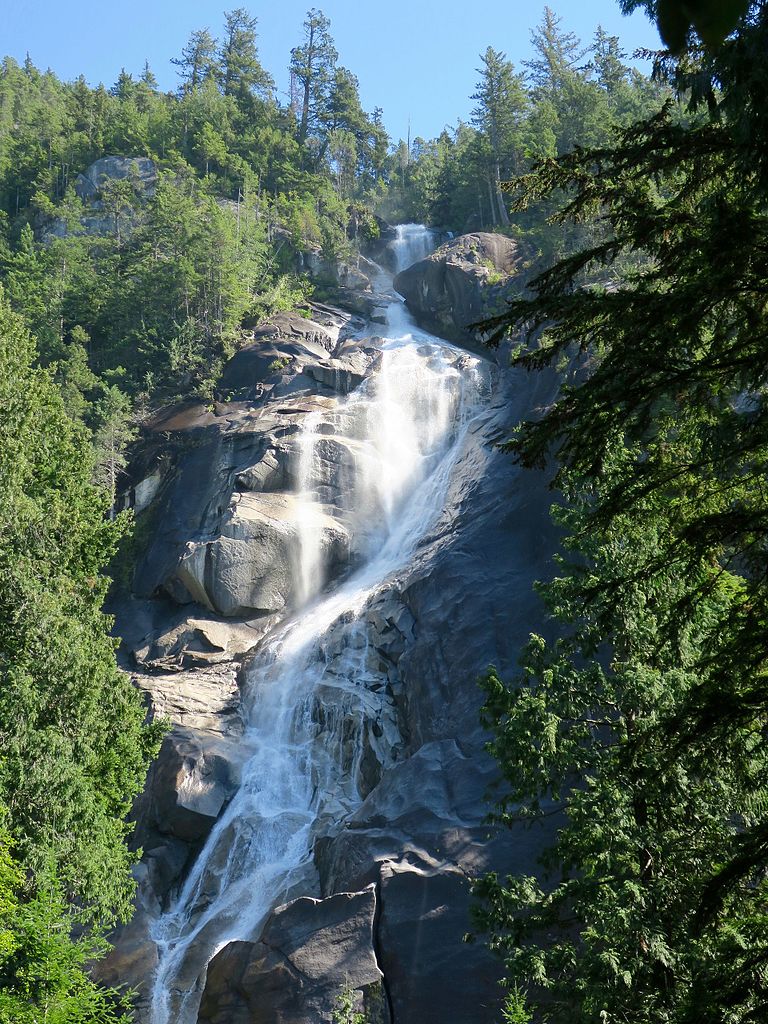
Shannon Falls, British Columbia
The tragic death of three young people at Shannon Falls, near Vancouver, BC, Canada, while out for a day fun with friends, has saddened many.

The group of friends were hiking near the falls, when one, a young woman, fell in. Two young men, one her boyfriend, fell or jumped in while attempting to rescue her. All three died.

News of the positive yet daring adventures of one of the deceased - a vlogger* - made me think of this death-by-selfie piece I wrote a few years ago. For me, the connection is the drive to share life experiences in social media. I'm not suggesting the friends were doing anything foolish when the accident happened; it just seems timely to share.

*Vlogging is a form of blogging based on videos (the vlog category is popular on YouTube).

DEATH BY SELFIE


- by Roberta Westwood

Think that selfie is fun? Harmless?

Aside of the downsides of "missing" the experience of where you are, because you're so busy capturing your selfie, you may be surprised to to learn that taking selfies is actually dangerous.

What starts as playful fun can cross the line when selfies become an obsession, in which you become less aware of your surroundings and take ever-increasing risks.

Especially for men. The truth is that while women take more selfies than men, 75% of selfie death victims are MEN.

Selfie deaths?!? Really? You bet.

Selfie-takers have been killed by:
  • Falling off cliffs while taking selfies (many)
  • Falling over viewpoint barriers
  • Falling over a cliff when leaning on a gate that gave way
  • Sitting on boulders forming a safety barrier over a gorge, which gave way
  • Falling into a volcano crater
  • Falling down stairs
  • Falling down stairs while taking a selfie at the Taj Majal
  • Falling off bridges (many)
  • Falling off dams (several)
  • Falling into a pond
  • Falling into a spring
  • Falling in irrigation canals
  • Falling into water reservoirs
  • Falling into a quarry filled with rainwater
  • Falling into a well, while leaning over it to take a selfie showing the depth
  • Taking selfies in a melt hole (cave) at the front edge of a receding glacier, when the roof gave way
  • Taking selfies with waterfalls (several)
  • Standing in rivers while taking selfies
  • Waves, when standing on the beach (several)
  • Waves, while standing in the surf, in a storm, taking selfies
  • Taking selfies with trains (several)
  • Falling off moving trains while taking selfies
  • Climbing on top of moving trains
  • Climbing on top of stationary trains mistakenly believed not in service (many by electrocution)
  • Crashing cars while taking selfies or uploading selfies while driving
  • Being hit by cars
  • Being hit by a car while taking selfies with airplanes
  • Standing in a boat to take selfies (drownings)
  • Climbing on a fountain to take selfies
  • Climbing onto a glass dome to take selfies, and falling through
  • Climbing on girders in a construction site to take selfies
  • Preparing to take a selfie by hanging from a rope from a high-rise
  • Leaping to take a "flying selfie" (at Machu Picchu)
  • Falling into a geyser while taking a selfie
  • Posing with guns (many!)
  • Posing with grenades
  • Posing with a rattlesnake
  • Posing with tigers at the zoo (several)
  • Taking selfies with a walrus at the zoo
  • Posing with a bison in a national park (gored)
  • Posing with an elephant near their tent on a safari
  • Getting out of a vehicle to take selfies with a herd of elephants blocking a road

Places where selfies have banned, due to deaths:
  • In Pamplona, Spain, during the Running of the Bulls in Pamplona
  • At New York State zoos (tigers)
  • Anywhere in Mumbai (India has very high selfie deaths)
  • In Japan, selfies and selfie-sticks on train station platforms are banned

Places where selfie bans have been proposed, due to high selfie deaths:
  • In Paris, at the Eiffel Tower
  • In Rome, at Trevi Fountain
  • In Rome, on the Spanish Steps

Do you believe me now?

Even if you are not killed, just imagine the extent of serious injuries any of the above could cause.

Seriously, have fun out there, but don't let it cost you your life (or limbs!)


Related resources
List of selfie-related injuries and deaths - Wikipedia
40% Selfie Deaths from India, Selfie Obsession kills over 60 people Worldwide - Phone Radar
Mumbai sets no-selfie zones as deaths linked to selfies rise - Associated Press
No Selfies Allowed: Social Media Bans at Landmarks - Conde Nast Traveler
Selfie deaths: six people who died while taking a selfie - The Week
In Goa, red flags go up on beaches after tourist deaths: Selfies can be dangerous - The Indian Express
Selfies can be deadly - and India leads the way - Economic Times
Two young women struck by lightning while taking selfies - Economic Times
Death by Selfie - Martin Parr

Monday, July 2, 2018

Venice: Murano on a shoestring

Perhaps you have heard that Venice is expensive. It is... and it isn't... More on that in another post, but here's a good example of what you can do on the cheap in Venice and still have an amazing experience: a self-guided Murano glassmaking tour.

Setting out to Murano is as easy as jumping on the vaparetto - and if you are in Venice for a few days then you probably already have a vaparetto pass; if not, tickets are cheap and you'll be using a few everyday anyways. So I consider the transportation segment "free".
Once on the island, you can find a glassmaking demonstration for as little as 5E. As I was getting off my vaparetto (at the first stop on Murano), there was a guy pointing the way to demos, less than 5 minutes walk away - I listened and paid attention to the details so that I could come back after lunch. But to the experience itself. I walked in, paid my 5E, they waited a few minutes longer for others to arrive and then the demonstration started. Exciting to be there, right in the workshop, next to the truly red hot furnace. There were only two other people there so I was able to get very close. Here are the glassmakers getting started...
Just before they got started, they noticed that one of the stones in their oven broken. The solution? Weld it together with a blob of hot glass!
Now, here is our blob of hot glass...
I had my camera on the glass-end of the process, but they guy would have been blowing down the tube you see while he rolled the rod around and the blog began to change shape...
He would put the glass back in the oven every few minutes before continuing on. At this point, there was another guy with another blob of glass in a different colour holding his stick next to the main guy. Here you see the main guy using tools to manipulate the second piece of liquid glass as it was twisted around the original piece...
Shaping the glass with scissors, hard to tell what is happening, but very interesting... They did have an audio recording playing during the demo, in English, explaining the overall process, the heat of the ovens, etc.
I literally gasped out loud as I recognized the horse that he was making...
Creating the legs...
And the finished product!!! Took all of 5-10 minutes to create. We had a quick minute to take pictures then this horsie was heading to a cool-down furnace for 24 hours.

They shepard you into the glass shop after the demo - with incredible stuff costing hundreds and even thousands of dollars - but all I bought was 2 little pieces of glass (a paper weight and a butter knife) for 10E each.. They didn't make their millions on me, obviously! Walking back to the vaparetto I spotted this gate at another glassmaking establishment and snapped a couple pics...
Another closeup of the gate....
Now, for a few other pics from my time on Murano... This is one of the glass places:
And another... this sign was made out of little chips of coloured glass:
This canal was the other way from the glassmaking demo and it's where I went first for a bit to eat and to soak in the ambience....
Oh, on the way to Murano, the first stop you come to is this one. Don't get off here, unless you have a hankering for seeing some crypts and graves...
These were some pilons that had seen better days that I spotted on the journey... I think they were just for directional purposes (once you get out on the water to/from Murano you can clearly see that they have "lanes" for the waterways)...
While I was at lunch, I observed this activity taking place on the canal across from me. The boat had a big winch (from which the operator made a point to look cool and grin once he spotted me taking pics, lol) and they were lifting heavy stuff out... Once they get these materials out of the boat, they will put them on top of that rickety old wheel barrow and all they guys would help push it along to a nearby building. It was rather hilarious as I was wondering if they wheel barrow would survive...
My pizza and beer. Pretty cheap, for Venice, totalling 21E for a whole pizza and two beers. And veeery good!
Found this guy fishing for lunch near the glassmaking demo place...

So, that was my budget tour. You don't need a tour company for this little jaunt. It was easy to do, very pleasant and for 5E who can complain?


This story was originally published on my personal blog while travelling.

Sponsored content (mine!)
Cruises from Venice - my cruise website
Feel free to contact me if I can help you with your travel plans

Saturday, June 2, 2018

Campiglia Marittim (near Livorno)

If you are fortunate enough to return to Livorno, Italy on a cruise port call, and have already visited Florence, the surrounding countryside, and Livorno itself, you may find a daytrip to a nearby historical town is a relaxing alternative. Here is a little town I discovered when a client asked me this exact question.

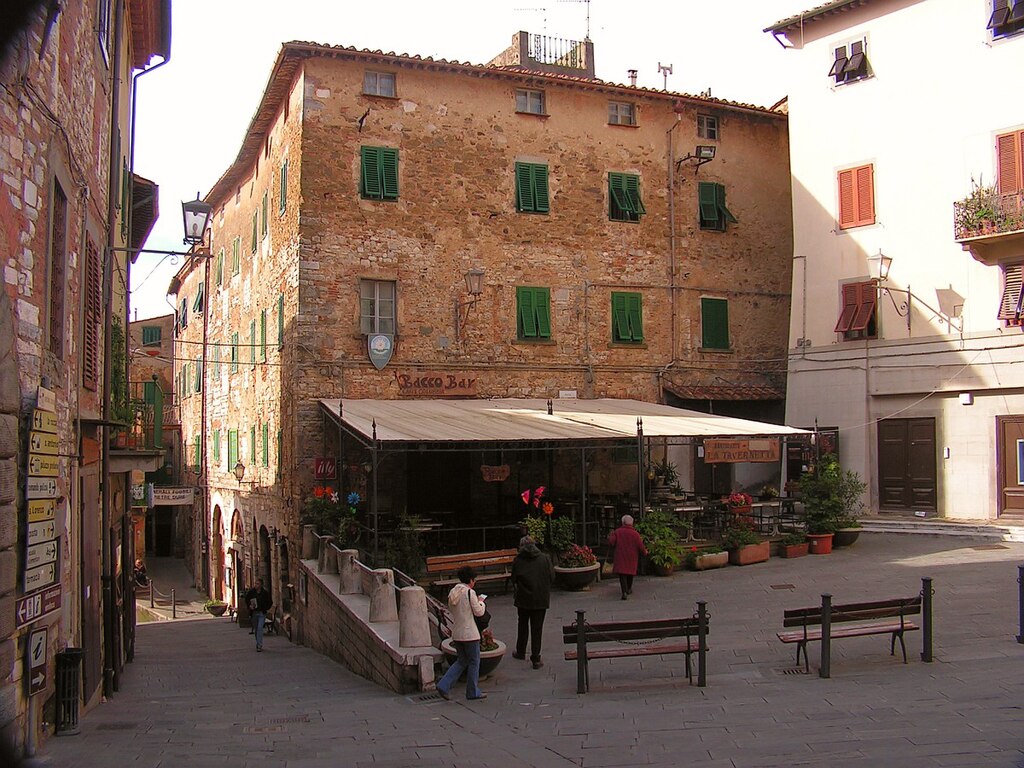
Piazza della Repubblica
Campiglia Marittima is a comune (municipality) in the Province of Livorno in the Italian region Tuscany, located about 90 kilometres (56 mi) southwest of Florence and about 60 kilometres (37 mi) southeast of Livorno.

Situated in a hill overlooking the sea and the surrounding countryside, the town has medieval origins but traces of Etruscan and Roman civilizations can be found as well.

Apritiborgo Festival scene
Creative Commons image, tanran2 on Flickr
If you visit in August, you may be in for a treat. This is when the town hosts Apritiborgo Festival, a street art festival that has been held annually since 2005. It usually takes place in mid-August, from around the 11th to 15th (be sure to check the actual dates for the year you visit).

Campiglia Marittima's past is linked to metal-working activities, This is evidenced by the Val Fucinaia furnaces and the remains of mining and metallurgical works in the Archaeological-Mineral Park of San Silvestro.
Rocca de San Silvestro
Archaeological-Mineral Park of San Silvestro

All other images: Wiki Commons

Berlin: Meet the "real" Checkpoint Charlie

If you've been to Berlin and think you have visited Checkpoint Charlie, but have not ventured out of the city core, you probably saw the replica at the site where Checkpoint Charlie once stood. The "real" Checkpoint Charlie lives at the Allied Museum. In fact, there are two Charlies in residence here.

All that remains of the original hut erected at Checkpoint Charlie in 1961 is this facade, but it is preserved inside at the museum:
Outside the museum is the actual Checkpoint Charlie building that was removed, intact, from where it stood on the border between East and West Berlin in 1989 when the wall fell. Note: In the background of this picture, you can also see a train car; the Allies ran regular military trains during the occupation period and this is a car that has been preserved.
Silly Canadian girl getting her picture taken with Charlie....
The museum also has a real watchtower, complete with a working spotlight, and a slice of the Berlin Wall:
This watchtower once stood at Potsdamer Platz and Bernauer Strasse and inside there is a red phone from the day when the tower was in use. To quote from the adjacent plaque, "The Red Telephone connected the last supreme commander of the former Soviet Forces in Germany, Colonel General M. P. Burkakov with his superiors in Moscow." Spooky....
The pride of the museum is, without doubt, The Royal Air Force Hastings TG 503 aircraft that was flown as part of the Berlin Airlift during the Berlin Blockade of 1948-1949.
I actually got to tour the plane! While the museum is open daily, the aircraft tours only take place on specific days, so it took some organizing for me to get there on a Sunday! Here is my ticket which cost me a whole 1E (the museum was free)... cool the way they've done the tour tickets up, probably for appreciation by the kids, but I liked it too.

Up the stairs and just inside, looking out....
Sitting IN the plane, watching a movie about the Berlin Airlift. The film was only in German (you can learn all the history in English in the exhibitions) but a picture truly is worth a thousand words, and I still enjoyed it. Interesting to see it with a few children, important that they understand this history...
Waaaaay coool picture taken looking out the window, with the museum signage in the background....
Seeing this sign, and the spot where they hung their parachutes, made the visit very real. The airlift was not without its tragedies, including fatalities (39 on the British side, 31 on the American side, and at least 8 deaths on the German side).
The cockpit was quite something....
There were lots of other interesting exhibits, not the least of which was this jeep. There are 2 jeeps at the museum, both well preserved/restored.
Smile!!!!
This was a neat display, showing telephones, bus stop signs and postal boxes from the British, French and American occupying forces. They also had displays of uniforms from all three, if you are into that kind of thing...
Another remarkable exhibit is the authentic spy tunnel. During an 11-month period in 1954-1955 - in order to avoid being surprised again by actions such as the Berlin Blockade - the American and British intelligence services made clever use of a 450-metre long tunnel used for underground telephone cables used by the Soviet armed forces in the GDR (East Germany) by tapping the lines. There was quite the broohaha when the tunnel came to light, thanks to a British double agent named George Blake who spilled the beans to the Soviets. This last remaining section of the tunnel was salvaged in 2005.
Lot and lots of other good exhibits. Couldn't resist taking a pic of this kid checking out a model of an airport with a bunch of the planes.
Just a nice pic of one of the two buildings on site; the "Outpost" used to be a theatre, and they have done a clever job of repurposing the space without gutting it. Love the art deco feel.
Here's the Outpost at dusk with its neon lights on...
Finally, but actual first, was this statue I came upon on my way to the museum from the U-Bahn; it is actually part of the museum's collection. It is called "The Day The Wall Came Down". It's a very moving piece. The horses are life sized and seemed so real, and the torn and toppled wall pieces captured the moment. I wonder whether the horses symbolized the ones at Brandenburg Gate (which were imprisioned in the "no man's land" for 28 years); even if they don't, that's what it brought to mind for me.
Overall, a very good museum. It was maybe 20 minutes, 30 max, to get to the museum. Its doubtful you'll find crowds but you'll definitely find real "stuff". I spent 2-3 hours there. Depending on your level of interest in the history, you could spend less time (most do), or spend more time (I'm sure there are some, I still only absorbed about 1/2 of it). The website also has some good information, if you are patient, as the organization isn't the best, but the content is good.

This story was originally published on my personal blog while travelling.

Sunday, May 20, 2018

Rome 1960

The Opening Ceremonies of the 1960 Summer Olympics in Rome...
who knew what controversy had been stirring, and what was still to come?

I first bought Rome 1960: The Summer Olympics That Stirred the World, by David Maraniss, when it first came out. I was so interested in the topic that I paid full price for the hardcover (rare for me). It did not disappoint. If you are interested in Rome, or the Olympic movement, or both, I can highly recommend this book.

Here are a few reviews of Rome 1960: The Summer Olympics That Stirred the World

You can read a Q & A with David Maraniss, the book's author, on his website.

For a sampler, you can look inside the book or listed
Wrestling at the 1960 Summer Olympics in Rome

Blog retirement

I've decided to retire this blog. I don't really have the time or interest to keep it up... Any content of value has been transferr...